MacGougan at Large
Notes on Handedness - 1

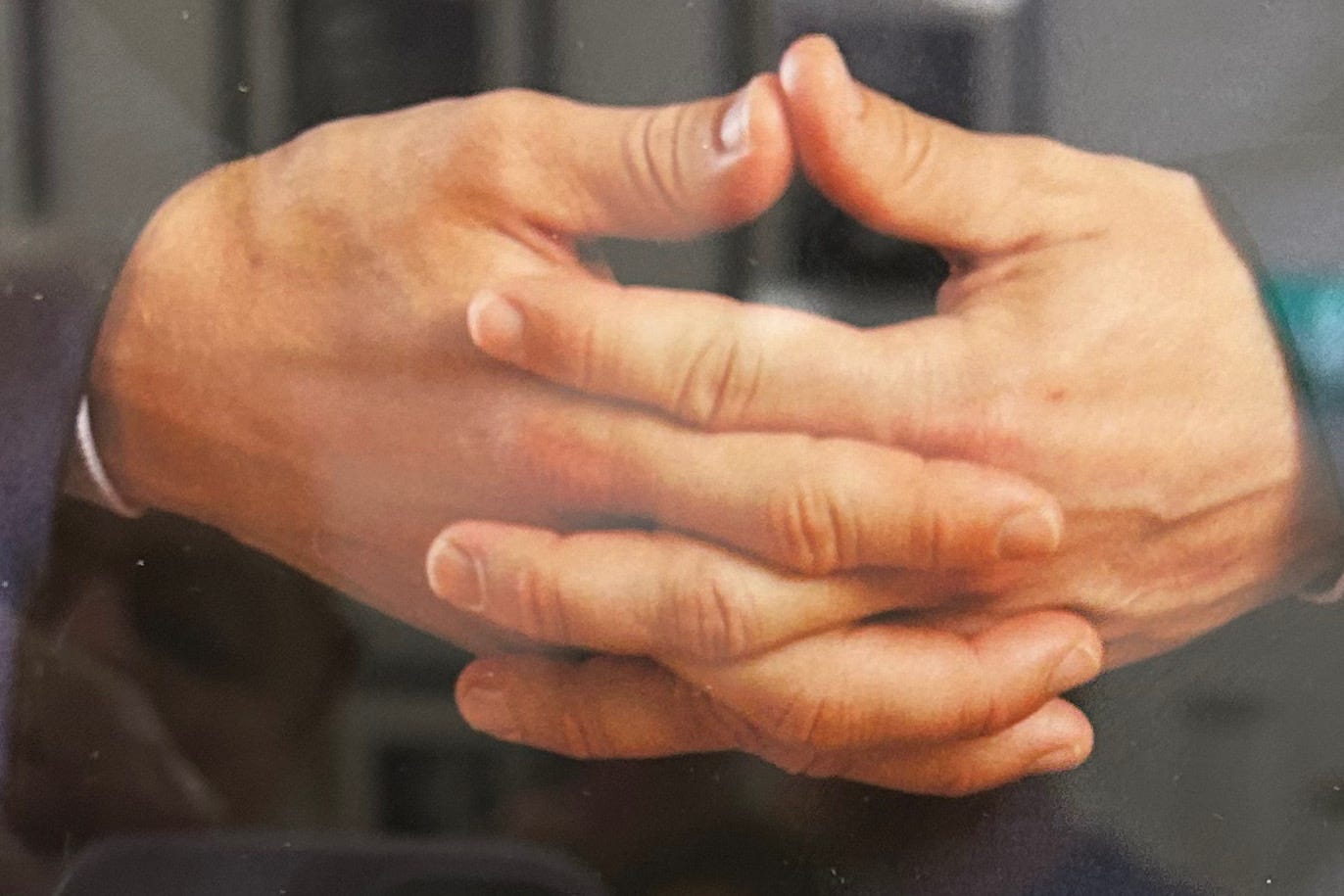
Boss and Assistant Hands
It’s hard to overstate how important hands are in our interactions with the world. They’re the key tools through which we experience our agency, our ability to do things. If we were elephants, we’d have one key tool, our trunks. If we were octopi, we’d have a whole toolbox of eight legs and countless suckers.
For us, though, it’s two hands. Balance being an elusive thing, one of our hands is typically dominant. We have a take-charge Boss Hand and a second-banana Assistant Hand.
It’s my observation that this phenomenon of one-hand dominance - whether it’s right-handedness or left-handedness - occurs on a spectrum. Some Boss Hands are happy to delegate and unthreatened by the achievements of their Assistant Hand. Other Boss Hands insist on doing everything themselves.
Either approach can work for most ordinary daily activities. Where things get interesting is when an Assistant Hand is asked to fill in for a task normally handled by the Boss Hand. Maybe the Boss Hand is tied up with a critical task that can’t be interrupted. Maybe the Boss Hand is temporarily out of service.
Can the Assistant Hand insert a key into a lock? Can it navigate on a touchscreen? Can it hold a pencil and write a legible short note?
Unless it belongs to Leonardo da Vinci, any Assistant Hand is going to be awkward when taking on Boss Hand activities. The Assistant Hands who are going to be especially challenged are those who have to sit on the bench all day, watching their Boss Hand do everything.
Which is to say that someone who’s extremely left or right-handed and who has their dominant arm in a cast can be as helpless as a newborn. Heaven help them if they live alone.
So I’m recommending that every so often we all check in on how our hands are getting along together. In particular, is our Boss Hand giving the Assistant Hand a chance to learn skills and build confidence?
If needed, we should encourage a little more delegation. For example, have the Assistant Hand be the designated key turner. It might create a little awkwardness at first, but if you’re ever housebound with a broken arm it might save you from starving to death.
P.S. On Hands, Faces, and Pictures
For this series, I wanted to use pictures of hands. Rather than take posed pictures, I simply zoomed in on hands that were in photos I already had.
What I learned in doing this is that hands are camera-shy. Pull out a camera and all the faces will look at you and the hands will disappear into pockets or behind backs.
If I were the sort of lyricist who traffics in metaphors, I’d be tempted at this point to suggest that people can be hands or faces. That is, those who do the work are often different from those who get their picture taken.
Anyway, the zooming in - plus the fact that pictures usually focus on faces rather than hands - means that some of the pictures will be a little blurry. Please think of this as arty and evocative.
Love the idea of delegating things to the assistant hand. When I was younger, I always practiced writing left-handed (assistant) but I stopped at some point. I will be restarting that. I think it’s good for your brain too.
People who have two Boss hands are called ambidextrous, revealing a right-handed bias. Lynne, who can actually write with either hand (left is slower but more legible) calls herself bi-sinistral. I like it.