MacGougan at Large
Notes on Laws That Aren't Really Laws


Murphy’s Law - The Pessimist’s Creed
Whenever I consider what topic to explore in my next series of Substack columns, I always start with a question: What would a typical reader be interested to know more about? Then I choose something different.
Why? Maybe I feel a need for a challenge. Anyone can write an interesting column about an interesting topic. There are plenty of other Substacks out there, all too ready to pander to the public’s desire for information on topics that they actually care about.
Or maybe I’m haunted by a fear of the personal disruption that might ensue if I were to achieve the sudden fame and fortune of a viral-hit, cultural-phenomenon Substack juggernaut. Safer to keep my head down and focus on topics that are only of interest to weirdos discerning nonconformists such as myself.
In unrelated news, today we’re starting a series on Laws That Aren’t Really Laws. These aren’t criminal statutes propounded by legislatures. They’re observations of patterns in our world, usually named after the person who originally pointed them out.
In subsequent columns, we’ll get to Moore’s Law, Parkinson’s Law, Gresham’s Law, and others. Today we start with the most famous one: Murphy’s Law.
Murphy’s Law states that, if anything can go wrong, it will go wrong. I had always thought that Murphy was a mythical figure, but Doctor Google tells me that he was the very real Edward A. Murphy, Jr. He was an aerospace engineer, and his insight was inspired by a botched experiment in 1949.
His actual pronouncement at the time was a complaint about the technician who had incorrectly wired the sensors for the experiment: “If there’s any way to do it wrong, he will.” This evolved over time to the version of the law that’s widely known today.
It’s actually quite a leap from Murphy’s original observation - that one particularly incompetent technician was unable to do anything correctly - to the current version, which suggests that everything in the universe is doomed to failure. But, of course, it’s only fitting that Murphy’s Law itself should fail to keep its meaning.
The modern Murphy’s Law is a wild overstatement - refuted every time we make toast without burning the house down or drive to the store without getting into a crash. If everything that could go wrong did go wrong, none of us would survive a single day.
Your modern aerospace engineer is likely to translate the law into something more reasonable, along the lines of: “In order to be properly prepared, you need to assume that everything possible might go wrong.”
That’s a good and prudent approach - although an alternative closer to the spirit of the original law would be: “Don’t let MacGougan wire up those sensors!”
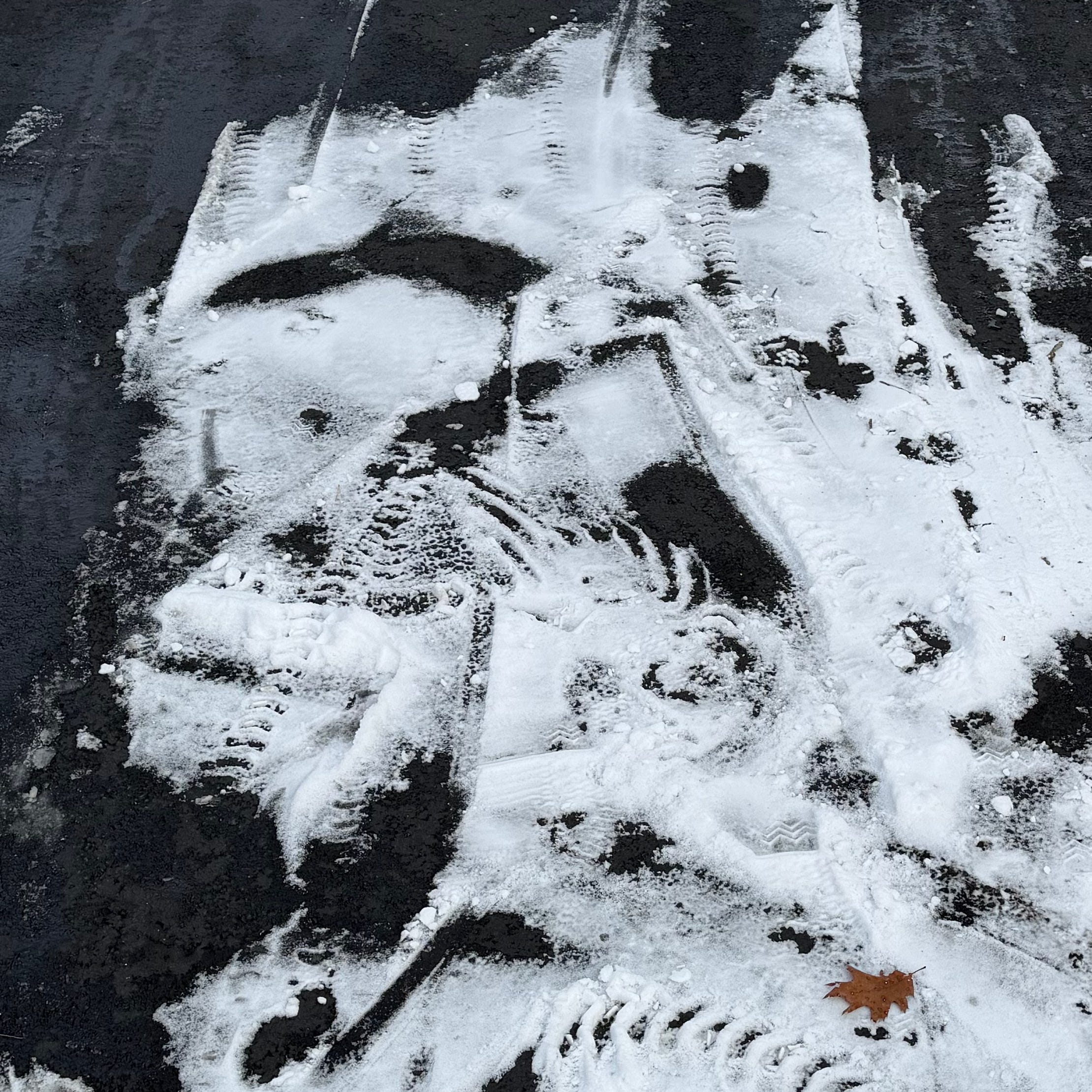
The photos for this series are ones I call Natural Abstractions - outdoor scenes that remind me of abstract art. What does that have to do with the theme of the series? “Any MacGougan-at-Large series for which there are no obvious pictures is always illustrated by Natural Abstractions.” This shall henceforth be known as MacGougan’s Law.

I love this! The intro is classic. I always assumed Murphy’s law was an old Irish proverb. I’m glad you straightened me out.
As someone who never has a fitting picture for a blog post, I appreciate Macgougan’s law, plus I take a lot of blurry, I mean, abstract pictures in general.