MacGougan at Large
Notes on a Trip to Québec City - 5

History - And There’s a Lot of It
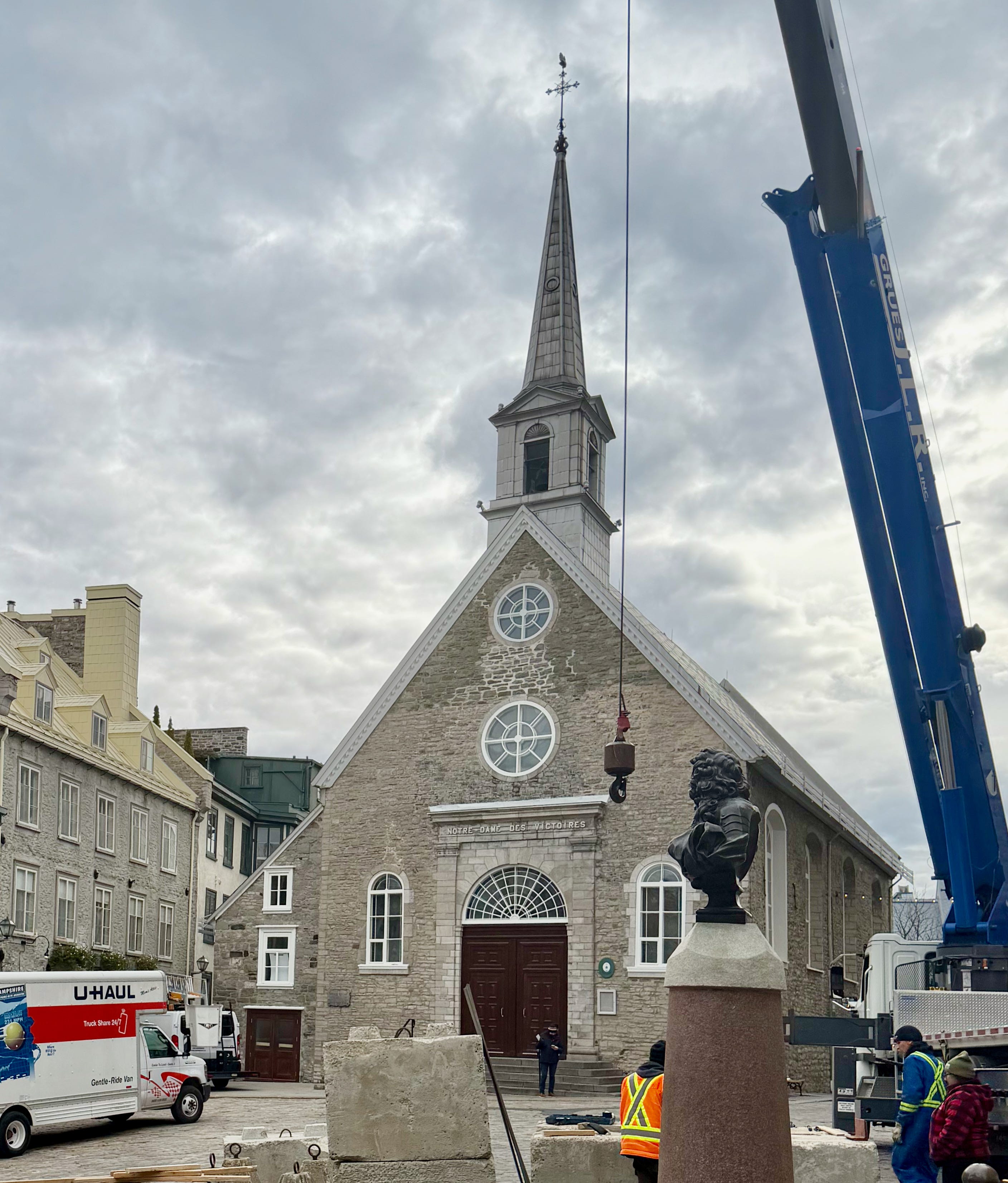
The history of Québec City is largely the story of rivalry between France and England. The French got there first. Champlain established a town on the site in 1608. There’s a church in the Lower Town that’s built over the site of Champlain’s original house.
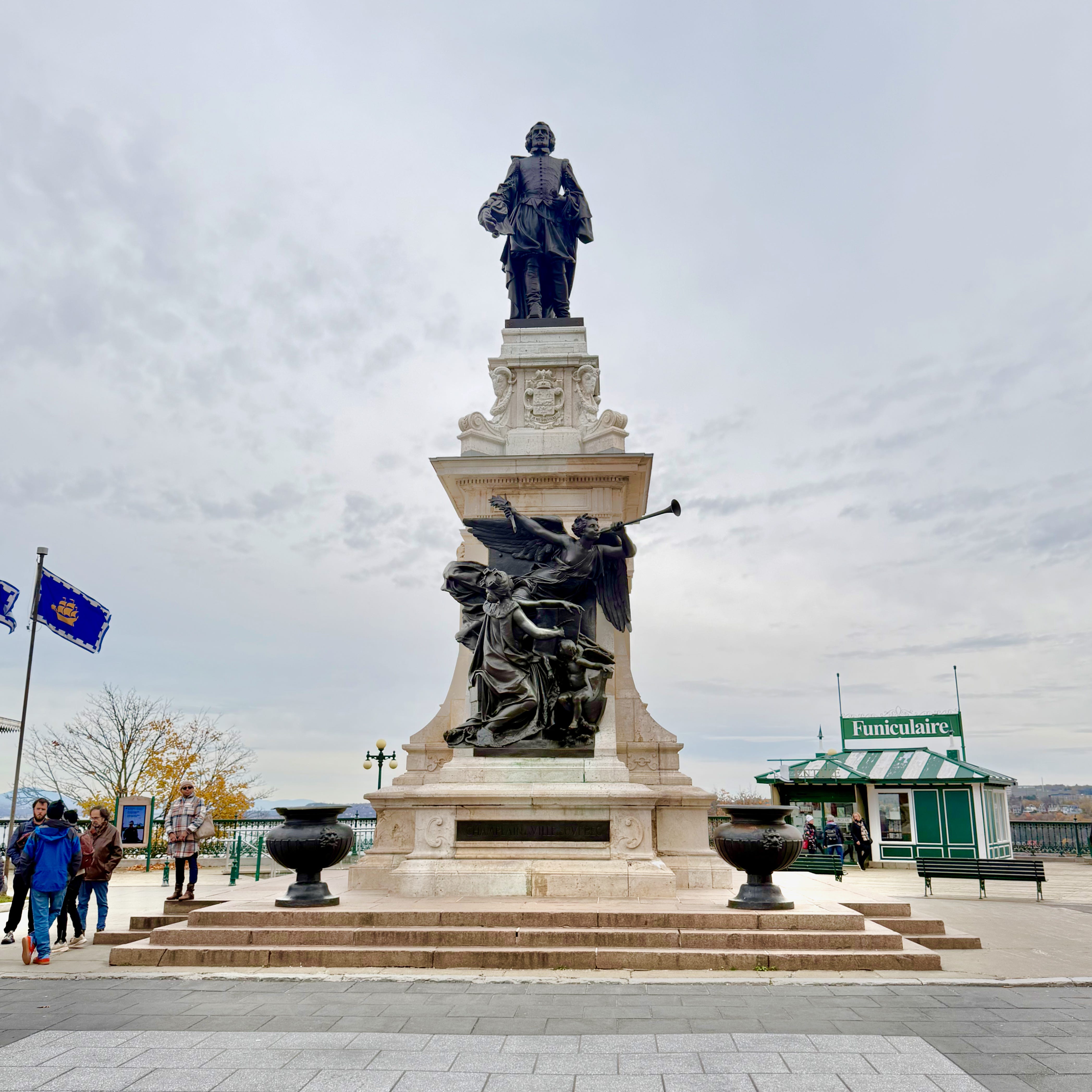
Champlain later moved his residence up to what became the Upper Town. The foundation of that house can be seen under the boardwalk near the Frontenac. In the same area today you can see what purports to be a statue of Champlain. (There were no records of what he looked like, so the sculptor simply picked a male model to pose as Champlain. The unreliability of visual images has been around longer than Photoshop.)
Back in the day, Québec City was the capital of New France. But here’s the thing. The city sits on a bluff overlooking a key narrowing point of the St. Lawrence River. That isn’t just any river. It connects the Atlantic Ocean to the Great Lakes. For the colonial powers of Europe, control of Québec City meant controlling access to a huge swath of the North American interior.
So it was only natural that England would covet the city. The French built and manned a fort on the bluff, but didn’t devote sufficient resources to it to hold off the English, who defeated them in 1759.
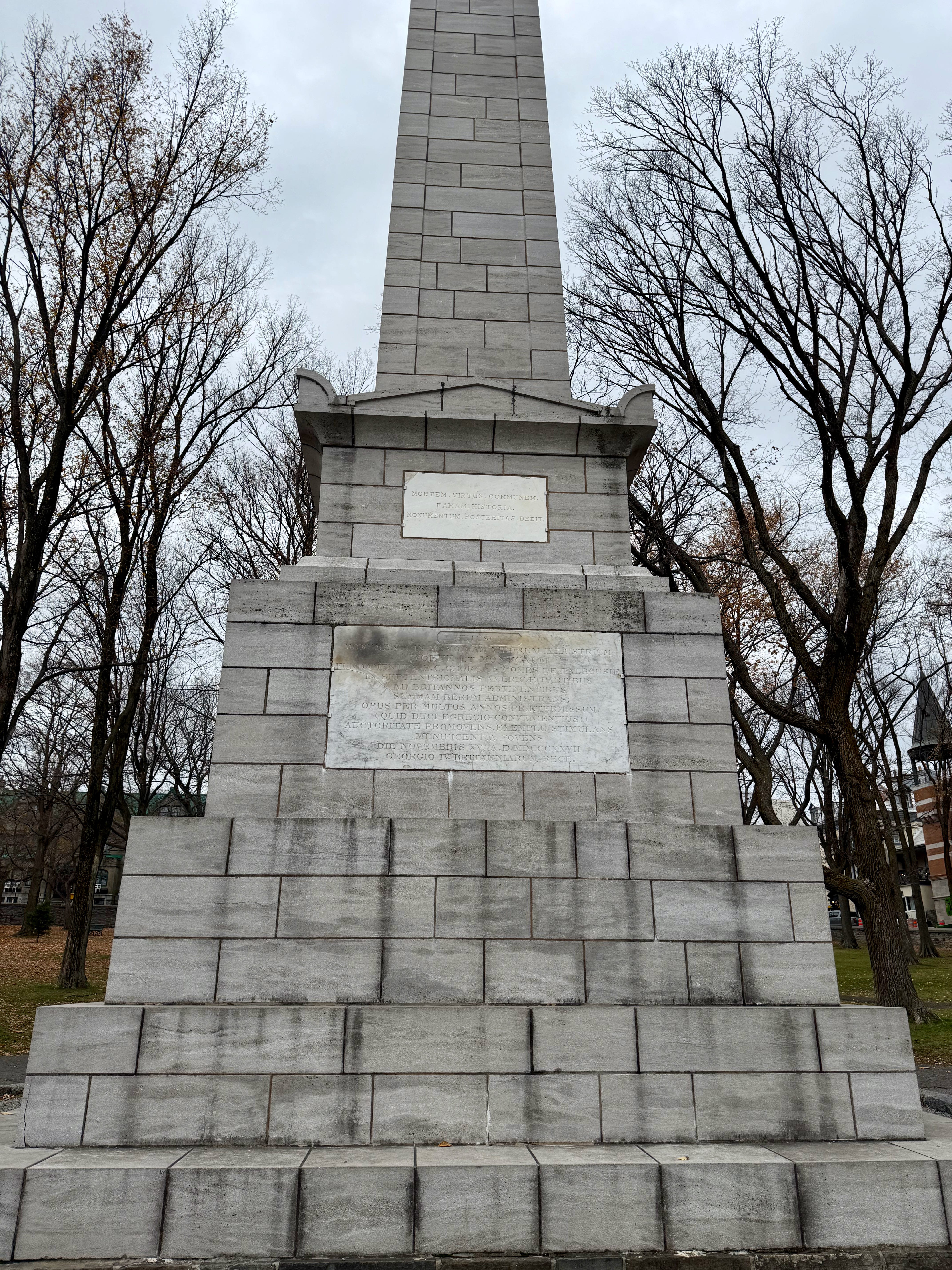
The English general was Wolfe and the French general was Montcalm. They were both killed in the battle. Being a general was clearly a dangerous job back in those days. There’s an unusual historical marker not far from the Frontenac. It’s a simple obelisk with the name Wolfe on one side and Montcalm on the other side and an inscription in Latin honoring all who fought on either side.
The defeat in 1759 was the end of New France and is the reason that Canada today is part of the British Commonwealth. Still, walking around the francophone metropolis that is Québec City today, it would be easy for you to imagine that Montcalm actually prevailed over Wolfe and sent the English packing. What happened?
The impending American revolution scared the administrators of British Canada. They knew that the French-speaking inhabitants of the region were uncomfortable under British rule. They feared that the restive locals might opt to join up with the increasingly rebellious colonies to the south. So they established the Québec Act of 1774, which allowed the inhabitants to continue a wide range of their traditions, including use of the French language and membership in the Roman Catholic Church.
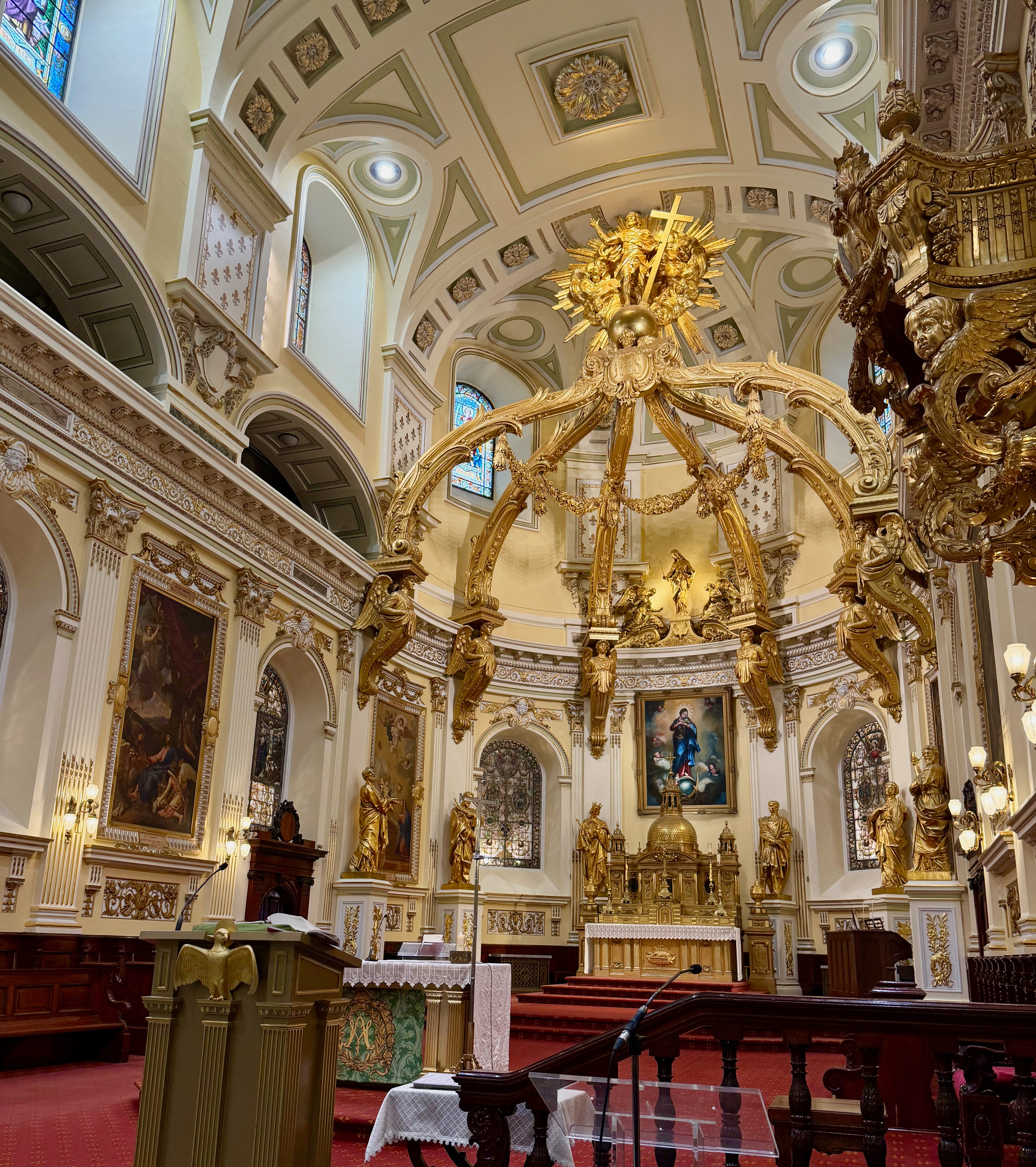
Québec City has two cathedrals, one Catholic and one Anglican. The interior of the Catholic cathedral is pretty impressive.
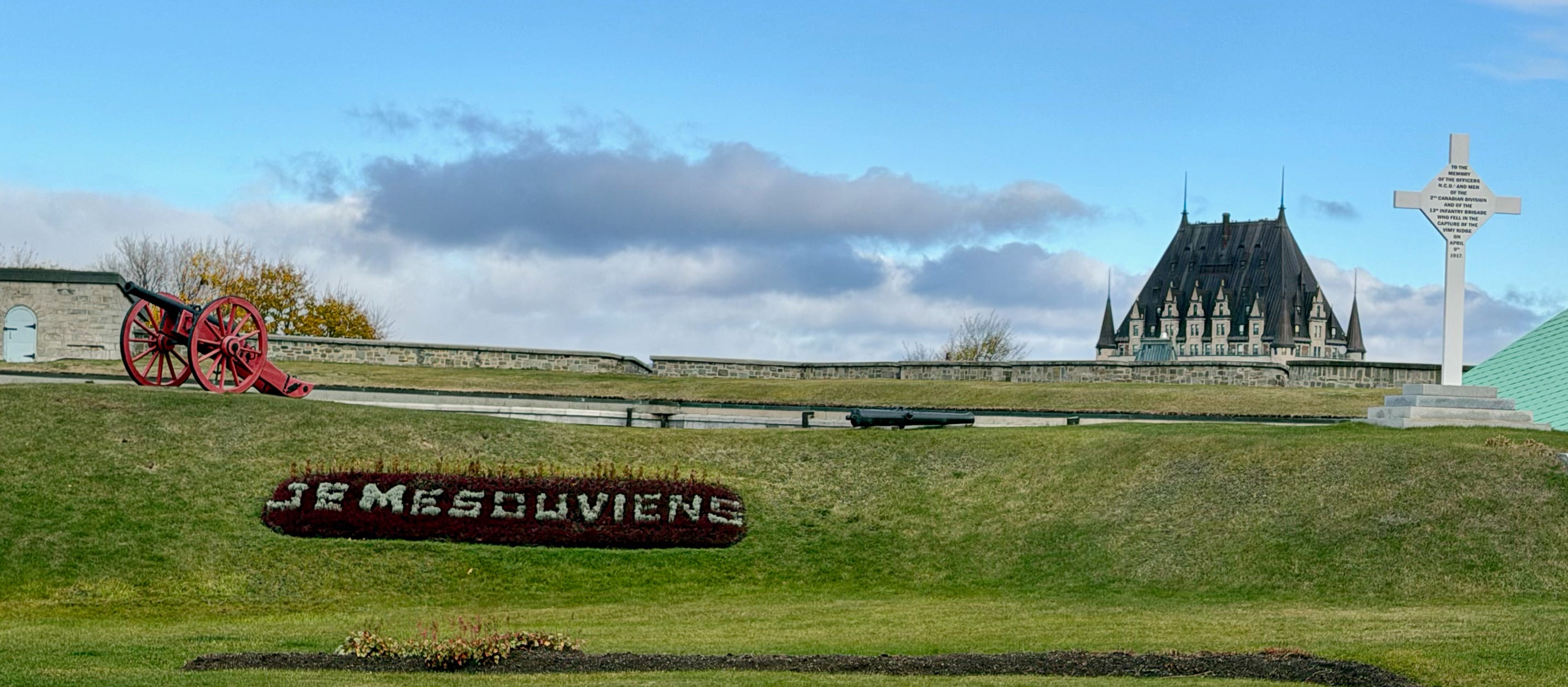
The British, fearing attack by the Americans, expanded the French fort, now known as the Citadel - but no attack ever came. The Citadel now houses a French-speaking battalion of the Canadian Army, the Royal 22e Régiment - informally known as the “Van Doos” based on anglophone attempts to say 22 in French.
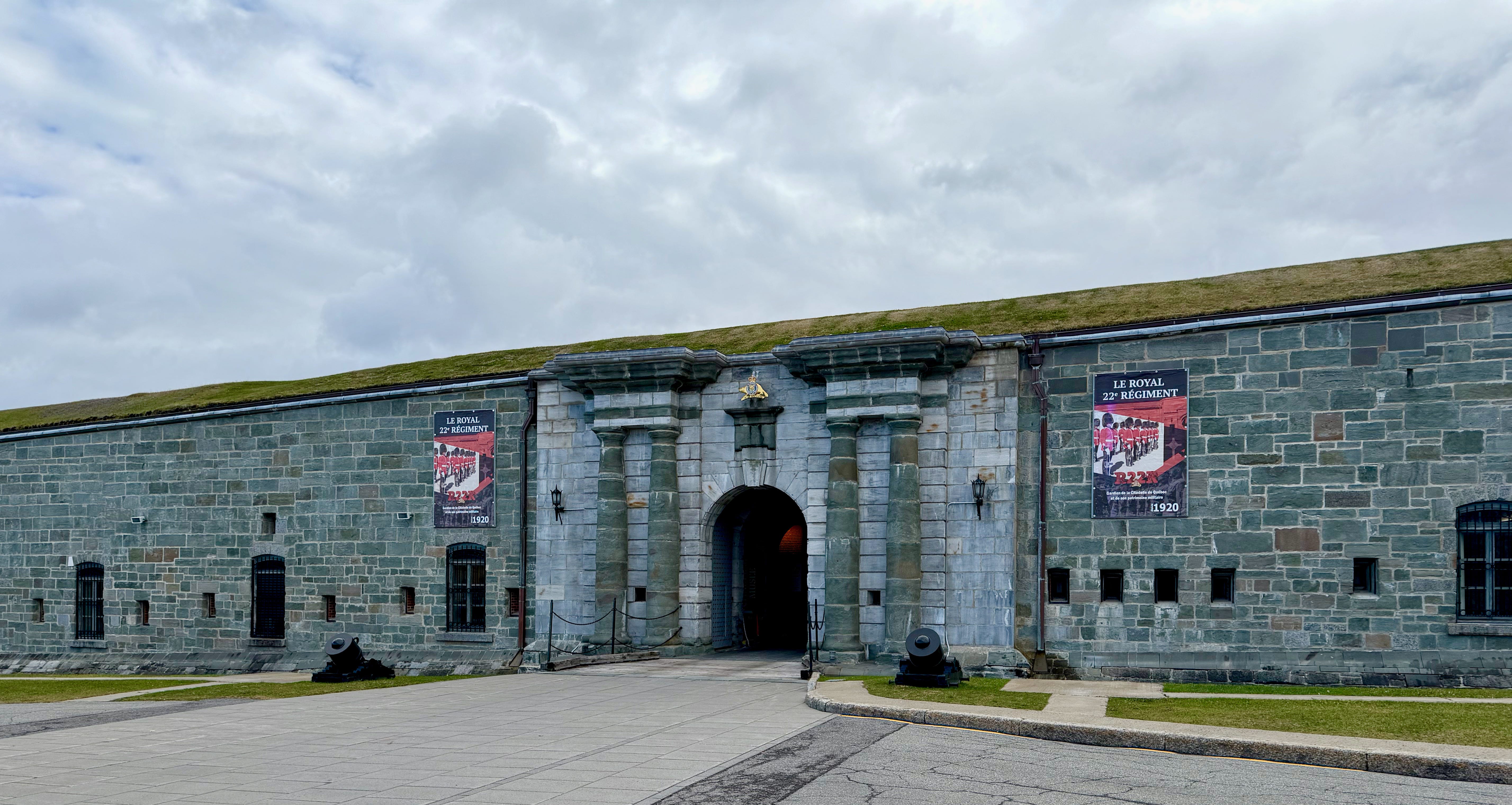
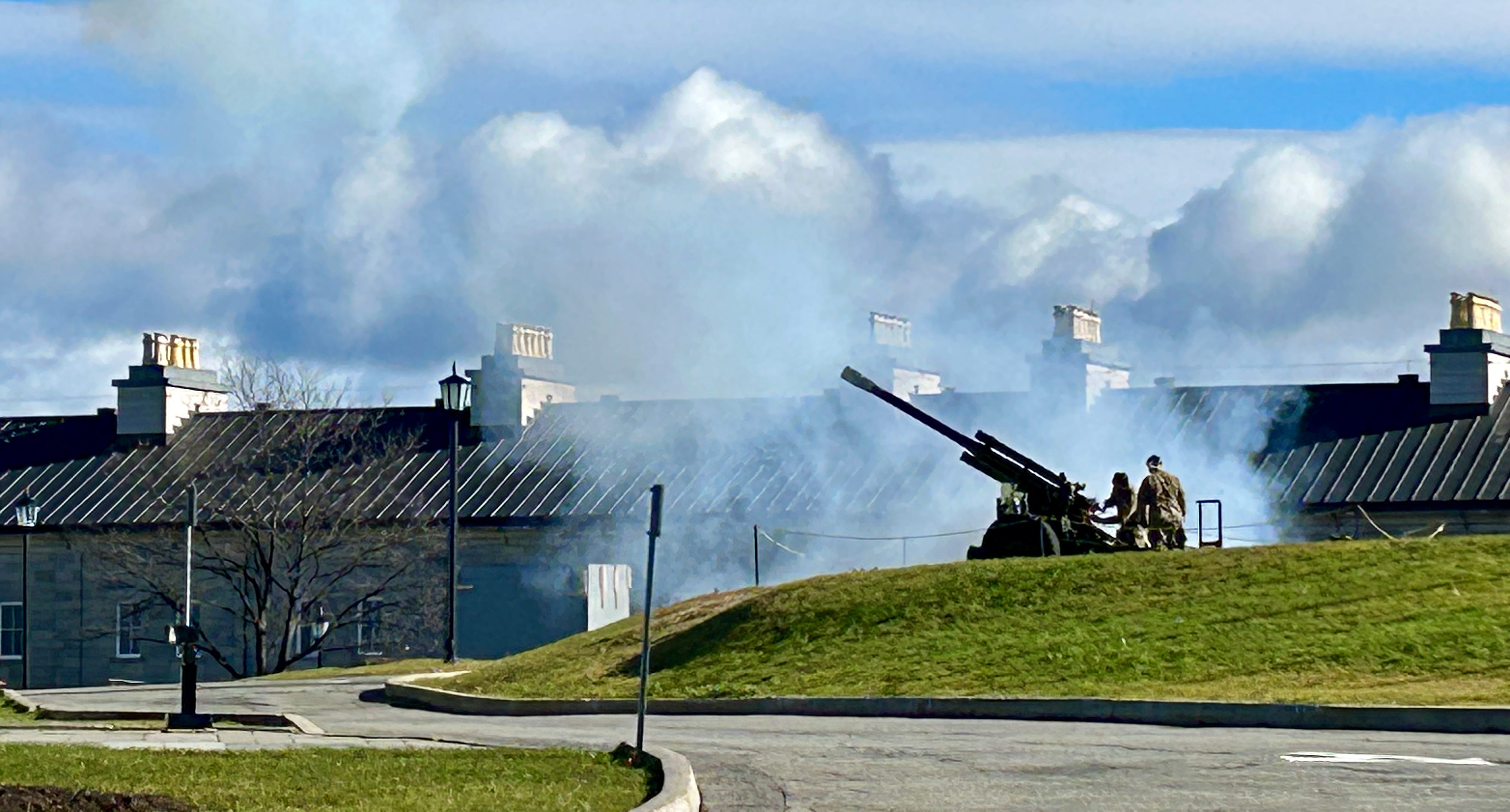
There’s an interesting tour of the Citadel, but you need to stay with the tour guide because the place is still an active military base. Every day at noon, they fire off a cannon shot. They’d better be using blanks, because the thing is aimed right at downtown.
Will we get a view inside the Anglican Cathedral next time?